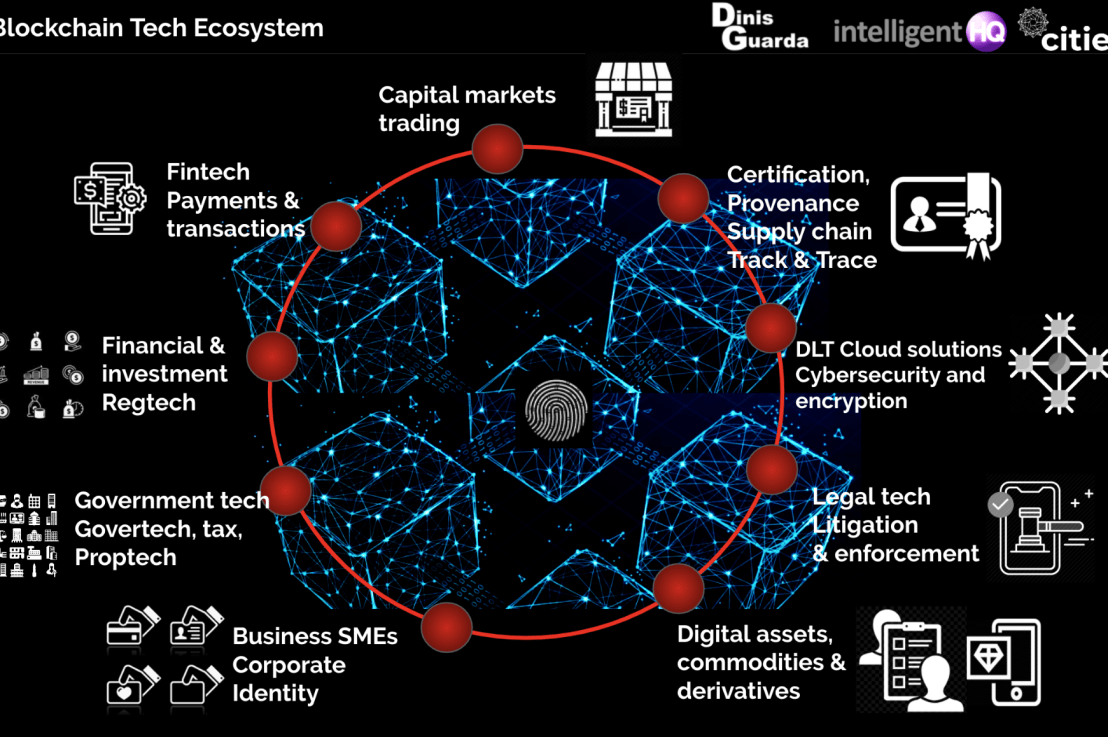
The conversation about blockchain has changed to the hype of cryptocurrency to the real-world, institutional use. The technology is under consideration in the public sector especially in the unclaimed property systems where it has been identified as a possible corrective to an existing transparency gap. Currently, over $100 billion in funds sit in state accounts, yet many citizens remain skeptical of government data accuracy due to opaque escheatment processes and manual reconciliation hurdles.
The issue at hand is lack of trust. Although centralized databases are efficient, in most cases, they do not have the irrevocable audit trails that can be used to demonstrate provenance or chain of custody even within states. Will distributed ledger technology (DLT) be the cryptographic validation that can enable claims automation and recovery of citizen trust? This paper assesses the technical, concrete applications, and the challenge of implementation of blockchain in government finance.
The Transparency Problem in Unclaimed Property Systems
Government agencies currently operate as centralized authorities over financial data, which inherently creates silos. Citizens often find it difficult to track the status of a claim in real-time, and states struggle with the manual overhead of interstate fund transfers. These “reconciliation nightmares” lead to data discrepancies and historical record conflicts that are costly to resolve.
Centralized systems are also theoretically vulnerable to single-point manipulation, making fraud detection a reactive rather than proactive process. As noted in the World Economic Forum’s analysis on blockchain for government, the primary value of DLT in the public sector is not just data storage, but “transparency by design.” By creating a shared, immutable record of every escheatment and payout, agencies can provide a tamper-evident history that simplifies auditing and reduces the liability burden on financial holders.
Blockchain Use Cases for Unclaimed Property
Blockchain offers several distinct functional improvements over traditional relational databases in a multi-stakeholder environment:
Unchangeable Audit Trails: Each transaction with a property record is cryptographically signed and time-stamped. This leaves a permanent history, which can be verified by the auditors in a non-manual way.
Smart Contract Claims Processing: With state laws coded into self-executing smart contracts, claims may automatically be processed once they have passed through particular requirements (such as identity verification) and settle near-instantly.
Interstate Reconciliation: Interstate swaps can be made on a shared ledger between jurisdictions: When property is transferred between State A and State B, the transaction is reflected throughout the whole network.
Decentralized Identity (DID): With verifiable credentials, claimants can demonstrate their identity without having to re-upload sensitive PII to various portals in different states, and follow the concept of self-sovereign identity.
While these technologies can significantly improve the back-end management of unclaimed property, they are most effective when paired with accessible user-facing platforms. The best portal, such as ClaimNotify, helps individuals search for unclaimed assets, understand eligibility requirements, and navigate the claims process more efficiently, bridging the gap between advanced infrastructure and a better claimant experience.
To have a technical description of how these automated agreements work, the Ethereum Documentation on Smart Contracts gives a background perspective of programmable logic in distributed systems.
Technical Architecture and Implementation
The initial important choice is the selection of the appropriate platform. Public blockchains provide the highest levels of transparency and are not always compatible with throughput requirements in government and privacy regulations. The majority of civic tech innovators are attracted to permissioned networks such as Hyperledger Fabric or Corda that offer the advantages of a shared ledger but only the validated state entities are allowed to operate nodes.
When deployed a distributed ledger for public records, a special attention should be paid to the governance models, especially in cases where several state agencies have to organize consensus mechanisms and responsibilities in managing nodes.
Data and Consensus
Architects must balance on-chain vs. off-chain data. It is costly to store big PII datasets on a ledger, and it breaches privacy regulation of a right to be forgotten. Rather, a hash anchoring approach should be adopted: the sensitive data must be stored in a secure off-chain database with the cryptographic hash being stored on the blockchain to ensure its integrity. Mechanisms such as Practical Byzantine Fault Tolerance (PBFT) or Proof of Authority (PoA) that are more commonly used in government consortiums are typically more energy-efficient than the energy-intensive Proof of Work.
Challenges and Limitations
Blockchain is not a panacea to all its potential. Technical constraints including scalability and the complexity of migrating legacy systems are still important. Moreover, the right to be forgotten specified in GDPR and other privacy laws poses a paradox concerning the immanence of a blockchain.
The most challenging one is governance. Establishing a multi-state consortium requires consensus not just on technology, but on cost-sharing, dispute resolution, and legal liability for smart contract bugs. As highlighted by the Brookings Institution’s research on tech policy, the legal validity of blockchain-based records is still an evolving landscape that requires harmonized state legislation to be fully effective.
Implementation Roadmap and Recommendations
Blockchain makes the most sense in scenarios involving high fraud risk or complex interstate coordination where “distrust” between parties is a structural reality. When a system has low volume of transactions and is single jurisdiction, a traditional centralized database is usually cheaper.
An intelligent roadmap would start with a Proof of Concept (PoC) of two or three states concentrating on a narrow set of uses, like a common audit log on interstate transfers. The executive sponsorship, and a clear governance model that specifies the way the network is going to scale are success factors. Alternatively, hybrid solutions – where Merkle trees are used to provide auditability in an underlying database – can provide much of the same benefits of integrity at reduced overhead.
Conclusion
Blockchain technology is a promising platform on which to modernize government data systems, but it needs to be assessed on its merits. Its real potential is to increase the level of transparency and facilitate automated, multi-party trust with the help of smart contracts and immutable ledgers. Nevertheless, technology must be used in the interest of the citizen and not vice versa. Wider adoption should be informed by pilot projects and make sure that any implementation gives as much emphasis to governance and privacy as it does to cryptographic security. Distribution of the future of unclaimed property can be quite possible, but we have to construct those systems with a sober view of their possibilities and their boundaries.


You must be logged in to post a comment.