
The Evolution of Artificial Intelligence: From Logic to Learning
Artificial Intelligence (AI) has evolved from a theoretical curiosity into a transformative force reshaping industries, societies, and human potential. Its journey spans decades of innovation, marked by paradigm shifts—from symbolic reasoning to statistical learning, and now to generative intelligence. Understanding this evolution reveals not just technological progress, but a deeper narrative about how machines have come to mimic, augment, and even challenge human cognition.
Origins: Symbolic AI and Rule-Based Systems
The earliest phase of AI, often called symbolic AI, emerged in the 1950s and 60s. Researchers like Alan Turing and John McCarthy envisioned machines that could reason logically, solve puzzles, and play games. These systems relied on explicit rules and knowledge representation—sets of if-then statements that mimicked human decision-making. For example, expert systems in medicine used predefined rules to diagnose illnesses. However, symbolic AI struggled with ambiguity, nuance, and the unpredictability of real-world data.
The Rise of Machine Learning
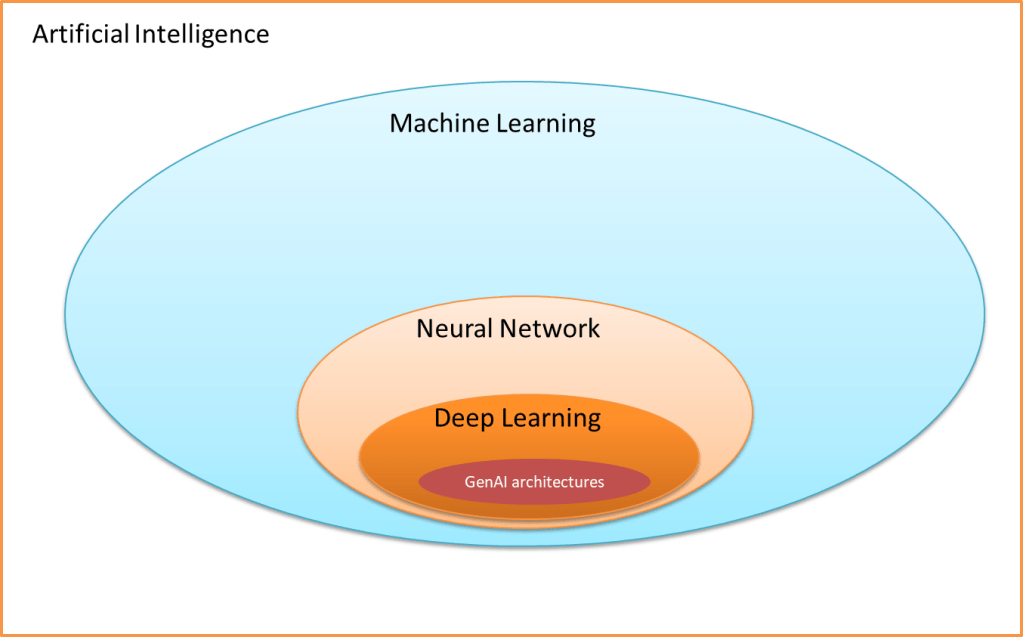
The limitations of rule-based systems led to a shift in the 1980s and 90s toward machine learning—a data-driven approach where models learn patterns from examples rather than being programmed explicitly. Algorithms like decision trees, support vector machines, and neural networks began to outperform symbolic systems in tasks like speech recognition and image classification. This era marked the transition from knowledge engineering to statistical inference, laying the groundwork for modern AI.
Deep Learning and the Data Explosion
The 2010s witnessed a dramatic leap with the advent of deep learning, powered by multilayered neural networks and massive datasets. Breakthroughs like AlexNet (2012) revolutionized computer vision, while recurrent and transformer-based models transformed natural language processing. Companies like Google, Facebook, and OpenAI harnessed these techniques to build systems that could translate languages, recommend content, and even generate human-like text. The availability of GPUs and cloud computing accelerated this progress, making AI more scalable and accessible.
Generative AI and Foundation Models
Today, we stand in the era of generative AI, where models like GPT, DALL·E, and others can create text, images, music, and code from simple prompts. These foundation models are trained on vast corpora and exhibit emergent capabilities—reasoning, summarizing, and even engaging in dialogue. Unlike earlier models, they are not task-specific but general-purpose, enabling applications across education, healthcare, law, and creative industries. This shift raises profound questions about authorship, ethics, and the boundaries of machine intelligence.
Toward Responsible and Explainable AI
As AI systems become more powerful, the focus is shifting toward responsible AI—ensuring fairness, transparency, and accountability. Researchers are exploring explainable AI (XAI) to make models interpretable, and governance frameworks to regulate their deployment. The evolution of AI is no longer just technical; it is philosophical, social, and political.
Conclusion
The evolution of AI reflects humanity’s quest to replicate and extend its own intelligence. From rule-based logic to generative creativity, AI has become a mirror of our cognitive ambitions and a catalyst for reimagining what machines—and humans—can achieve. As we move forward, the challenge is not just to build smarter systems, but to ensure they serve us wisely and ethically.

 Tech Talk
You must be logged in to post a comment.