This fictitious case study examines the strategic dilemma faced by Luxe & Co., a premium fashion and lifestyle brand navigating the transition from a relationship-driven physical retail model to a data-intensive digital environment. By 2025, the company had successfully shifted a majority of its revenue to e-commerce; however, this transition exposed deeper structural challenges. Rising customer acquisition costs, stagnant customer lifetime value, and declining repeat purchase rates signaled a weakening connection between the brand and its customers. Recognizing that the issue lay not in product quality but in the erosion of personalized engagement, Chief Marketing Officer Sarah Chen initiated a €15 million pilot program to test an artificial intelligence–driven personalization platform, StyleAI.
Continue reading “Case Study: LUXE & CO.: CALIBRATING AI PERSONALIZATION IN PREMIUM RETAIL”Tag: information systems
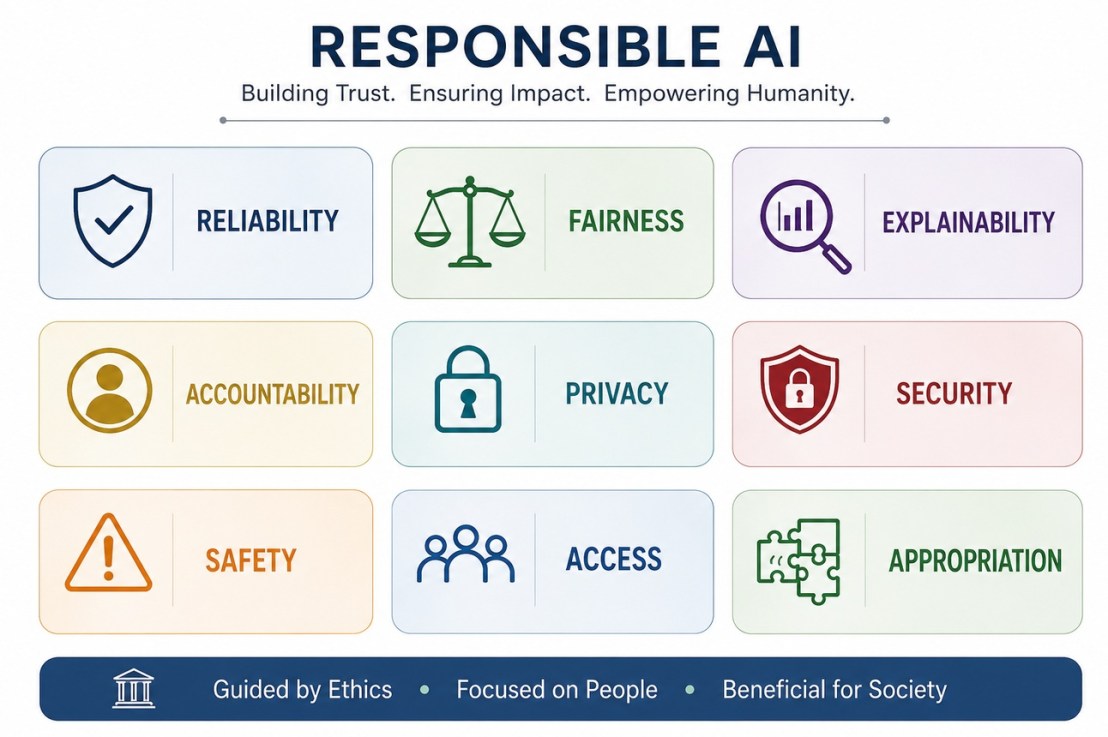
Why go for Responsible Artificial Intelligence frameworks during Digital Transformation
For firms, pursuing responsible AI is no longer a matter of public relations or ethical signaling—it is becoming a core strategic decision that shapes long-term competitiveness, risk exposure, and organizational credibility. As artificial intelligence moves from experimental use to mission-critical deployment, the question is not simply whether firms should adopt AI, but how they should design, govern, and integrate it into their operations in a way that is both effective and trustworthy.
Continue reading “Why go for Responsible Artificial Intelligence frameworks during Digital Transformation”Why Growing Companies are Shifting Away from Traditional In-House IT
As a business scales, its operational needs become exponentially more complex. What begins as a manageable technical setup quickly evolves into a sprawling infrastructure requiring constant oversight. For years, the default solution for growing companies was to build a dedicated, in-house IT department. However, this traditional approach is increasingly proving to be a bottleneck rather than a strategic advantage. Today’s dynamic business environment demands agility, robust security, and specialised expertise, prompting business leaders to rethink how they manage their digital operations. The speed of technological advancement simply outpaces the capacity of most internal teams to adapt organically.
Continue reading “Why Growing Companies are Shifting Away from Traditional In-House IT”Which IT roles will AI automate most
Specific IT roles are likely to be replaced with the advent of generative artificial intelligence. We wanted to undertake a brief survey of which roles are likely to be more impacted and hence, professionals in these roles should look into reskilling their portfolio and competency. Reskilling in AI/ML use could be a way to strengthen competency within this area itself.
Continue reading “Which IT roles will AI automate most”Case Study: Re-Architecting an IT Services Firm for AI-Native Software Engineering
This fictitious case study examines the multi-year strategic transformation of NovaTech Solutions, a global IT services enterprise, as it repositions itself from a traditional labor-arbitrage model to an AI-augmented and AI-native software engineering organization. Confronted with margin compression, automation-driven competition, and client expectations for exponential productivity gains, NovaTech’s leadership initiated a comprehensive enterprise transformation centered on AI-assisted coding, AI-enabled DevOps, and advanced AIOps infrastructure. Over a three-year horizon, the company restructured operating models, redesigned performance metrics, recalibrated talent strategy, and invested heavily in AI tooling and cloud infrastructure. The transformation created measurable productivity improvements and margin recovery, yet introduced complex cultural, technical, and governance challenges. Individual contributors grappled with identity shifts and skill displacement anxieties, while managers struggled to redefine productivity metrics and performance systems. Integration challenges across legacy systems and toolchains proved more demanding than anticipated. DevOps pipelines required architectural reengineering, and AIOps deployment introduced model drift, alert fatigue, and operational risk considerations. This case provides a comprehensive examination of the organizational, technical, financial, and strategic implications of enterprise-scale AI adoption in IT services.
Continue reading “Case Study: Re-Architecting an IT Services Firm for AI-Native Software Engineering”FinAxis Technologies: A Case about Migrating from Monolithic ERP to Microservices in a Regulated Fintech Environment
Note: This is a hypothetical case study for classroom discussion in the course Management Information Systems. The objective is to teach students learn about cloud computing ERP and challenges in emerging models of ERP adoption in enterprise applications. This is not a real case study.
Continue reading “FinAxis Technologies: A Case about Migrating from Monolithic ERP to Microservices in a Regulated Fintech Environment”Demystifying Artificial Intelligence using Set Theory
The Evolution of Artificial Intelligence: From Logic to Learning
Artificial Intelligence (AI) has evolved from a theoretical curiosity into a transformative force reshaping industries, societies, and human potential. Its journey spans decades of innovation, marked by paradigm shifts—from symbolic reasoning to statistical learning, and now to generative intelligence. Understanding this evolution reveals not just technological progress, but a deeper narrative about how machines have come to mimic, augment, and even challenge human cognition.
Continue reading “Demystifying Artificial Intelligence using Set Theory”3 Reasons to Consider the Installation of a Cloud-Based Phone System for your Enterprise
The emergence of the Internet over the last few decades has revolutionised the world of communication while this is especially pertinent if you are currently seeking to enhance the telephone infrastructure of your enterprise in the southern hemisphere country of Australia, because you should consider three compelling reasons to install a cloud-based phone system without experiencing any delay. Moreover, this type of communication system can provide your Australian business with increased flexibility, reduced operational costs and seamless scalability, each of which could significantly elevate your communication capabilities as well as enhance your overall business performance. Similarly, you should continue reading this insightful article because you can discover how the adoption of a cloud-based telephone solution can strategically position your enterprise for long-term success, especially when it comes to the increasingly digital and competitive environment across the country.
Continue reading “3 Reasons to Consider the Installation of a Cloud-Based Phone System for your Enterprise”The Business Case for CMMS Integration in 2025
What’s the real cost of disconnection in your maintenance operations? Every year, businesses lose time, money, and productivity because systems don’t talk to each other. Teams rely on spreadsheets, emails, and outdated processes to manage critical maintenance tasks. The result? Miscommunication, delays, and preventable downtime.
Continue reading “The Business Case for CMMS Integration in 2025”Four Significant Asbestos-Related Diseases and their Symptoms
Have you ever reveled in the cool comfort of your grandparents’ old basement, surrounded by dusty boxes and forgotten treasures? Or perhaps you’ve swung a hammer at a stubborn wall in your fixer-upper, sending plumes of unexpected debris into the air.
Continue reading “Four Significant Asbestos-Related Diseases and their Symptoms”


You must be logged in to post a comment.