Remember when knowing “prompt engineering” was enough to look like the smartest person in the meeting? That skill now has the shelf life of a mango in a Delhi June. In just three years, AI models have gone from witty chatbots that wrote poems about your cat to software agents that read your codebase, call APIs, and file the ticket before you finish your chai.
Continue reading “The AI Model Glow-Up: What AI Professionals Must Learn Next”Tag: Smart Technologies
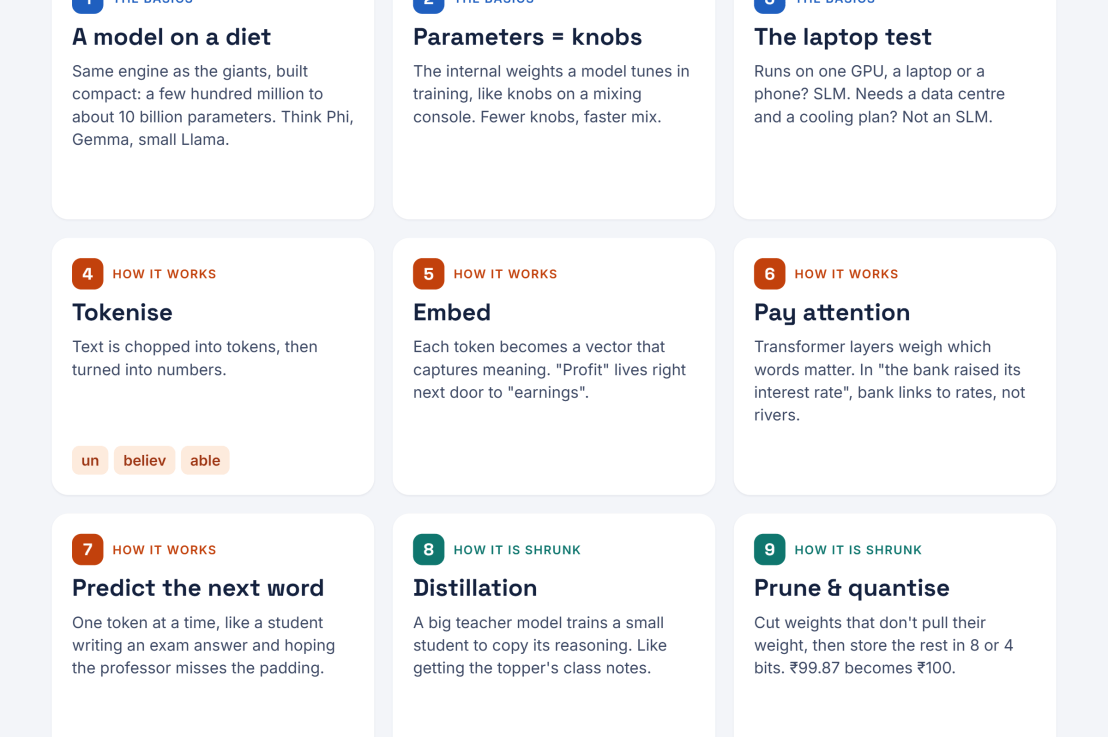
Small Language Models: Big Brains in Small Packages
For the last few years, the AI industry has behaved like a teenager at a gym: bigger, bigger, bigger. Every new language model arrived with more parameters, more data and a bigger electricity bill than the last. Then a quiet rebellion began. Researchers started asking a very Indian question: “Kitna deti hai?” How much performance do we actually get for every rupee of compute? The answer gave rise to Small Language Models, or SLMs. These are the compact, fuel-efficient cousins of giant models like GPT or Claude. They will not win a trivia contest against their big relatives, but they can run on your laptop, answer in a blink, and keep your data at home. In this post, let us open the bonnet and see what SLMs are, how they work, and why businesses are suddenly so fond of them.
Continue reading “Small Language Models: Big Brains in Small Packages”My Chatbot Has a Best Friend – Ways AI Tries to Feel Human
Imagine you open an app and an animated character you have been chatting with sends you a message: “So, my friend XXX was playing dodgeball in P.E. class, and while trying to dodge the ball, he tripped and fell. Oh gosh.” You chuckle. Poor XXX. You type back, “Is he okay?” and before you know it, you have exchanged twenty messages about a gym class that never happened, involving a boy who does not exist, told by a character who is entirely made of code.
Continue reading “My Chatbot Has a Best Friend – Ways AI Tries to Feel Human”The Smart Workplace Is Going Physical: How Everyday Office Tools Are Becoming Connected
When businesses discuss digital transformation, the conversation usually revolves around software. Cloud platforms replace local servers, artificial intelligence assists employees with everyday tasks, and automation moves information between applications without manual intervention.
Continue reading “The Smart Workplace Is Going Physical: How Everyday Office Tools Are Becoming Connected”Customer Network Value and How It Is Estimated
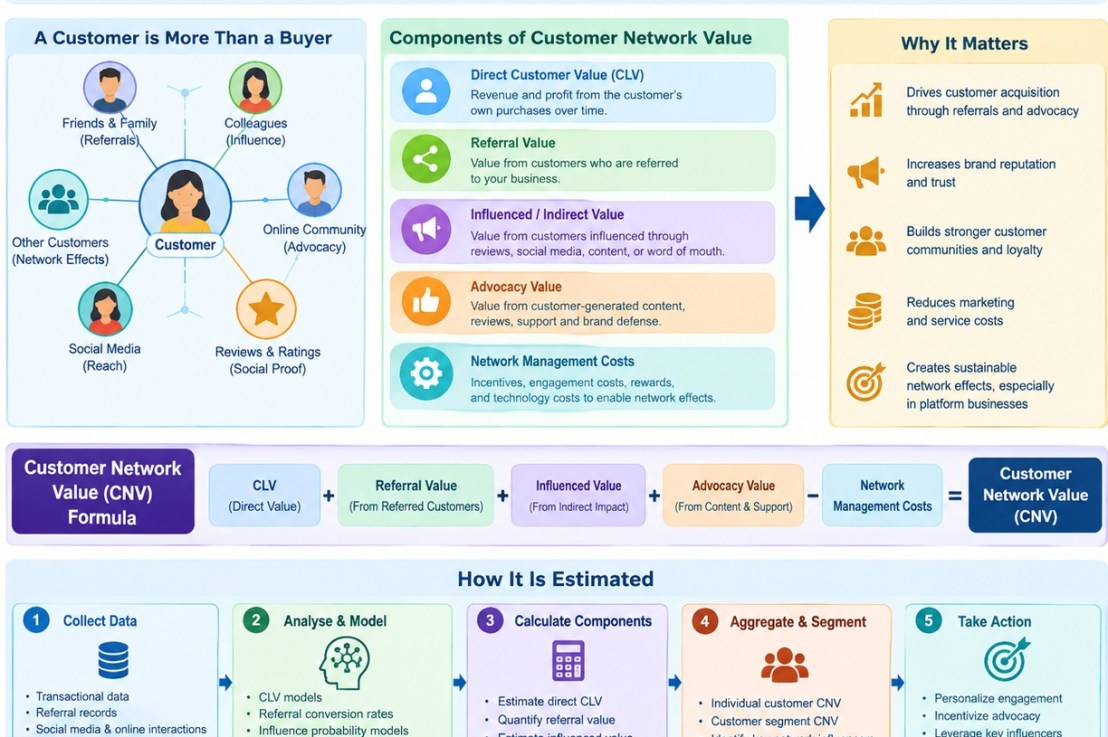
Traditional customer relationship management has generally evaluated customers according to the economic value of their own transactions. Measures such as sales revenue, customer lifetime value (CLV), retention rate, and purchase frequency help organizations identify customers who generate greater direct financial returns. However, in digitally connected markets, a customer can create value that extends far beyond his or her own purchases. Customers influence friends, colleagues, online communities, social-media audiences, and other potential customers. They may provide referrals, generate reviews, create content, strengthen brand reputation, and facilitate access to other customers. The economic value generated through these relationships can be conceptualized as customer network value (CNV).
Continue reading “Customer Network Value and How It Is Estimated”Choosing Between Wireless Bridges, Outdoor Access Points and 4G/5G Routers for Remote Business Connectivity
A wireless bridge links two fixed locations, an outdoor access point serves Wi-Fi devices across an open area, and a 4G/5G router brings internet service to a site through a mobile network. Businesses comparing commercial outdoor wireless access point options should therefore start with the traffic path, not the largest advertised speed. This guide explains where each technology fits and when a combined design is more practical.
Continue reading “Choosing Between Wireless Bridges, Outdoor Access Points and 4G/5G Routers for Remote Business Connectivity”Why Users Should Verify Official Websites Before Installing Productivity and Messaging Apps
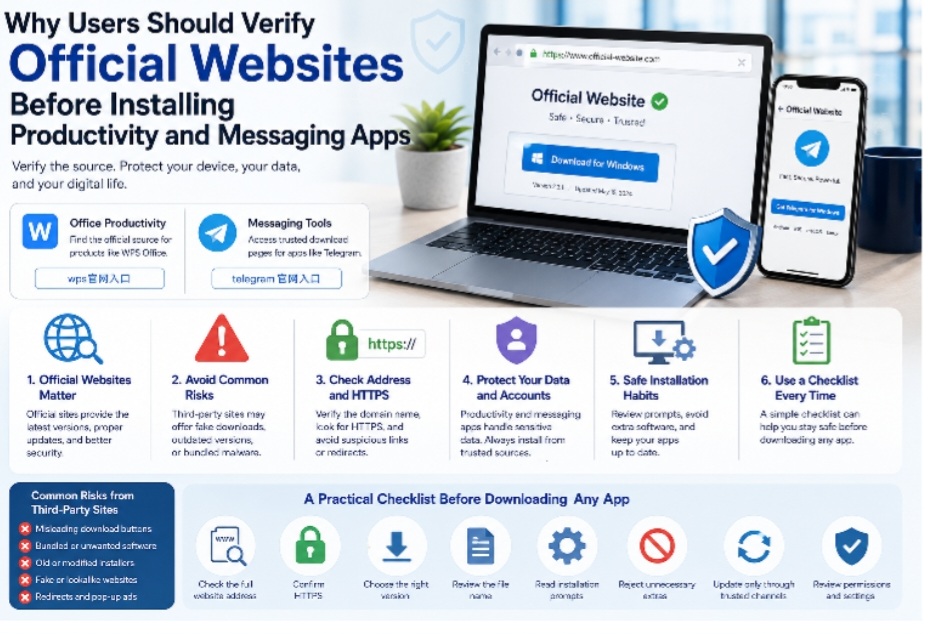
Installing software has become a normal part of daily digital life. People download productivity tools for documents, spreadsheets, and presentations. They also install messaging apps for team communication, private chats, online communities, and cross-device conversations. Because these apps often handle personal data, files, contacts, and account information, users should be careful before downloading or installing anything.
Continue reading “Why Users Should Verify Official Websites Before Installing Productivity and Messaging Apps”Top Cloud-Based Test Automation Tools to Watch in 2026
The world is now witnessing the wonders of automation, and the software industry is right in the middle of it. If you are still doing manual testing, you are lagging behind your competitors. As AI Multiple Research reveals, about 33% of companies are planning to automate between 50% to 75% of the testing process, and almost 20% of the companies are planning to automate over 75%.
Continue reading “Top Cloud-Based Test Automation Tools to Watch in 2026”Case Study: LUXE & CO.: CALIBRATING AI PERSONALIZATION IN PREMIUM RETAIL
This fictitious case study examines the strategic dilemma faced by Luxe & Co., a premium fashion and lifestyle brand navigating the transition from a relationship-driven physical retail model to a data-intensive digital environment. By 2025, the company had successfully shifted a majority of its revenue to e-commerce; however, this transition exposed deeper structural challenges. Rising customer acquisition costs, stagnant customer lifetime value, and declining repeat purchase rates signaled a weakening connection between the brand and its customers. Recognizing that the issue lay not in product quality but in the erosion of personalized engagement, Chief Marketing Officer Sarah Chen initiated a €15 million pilot program to test an artificial intelligence–driven personalization platform, StyleAI.
Continue reading “Case Study: LUXE & CO.: CALIBRATING AI PERSONALIZATION IN PREMIUM RETAIL”FinAxis Technologies: A Case about Migrating from Monolithic ERP to Microservices in a Regulated Fintech Environment
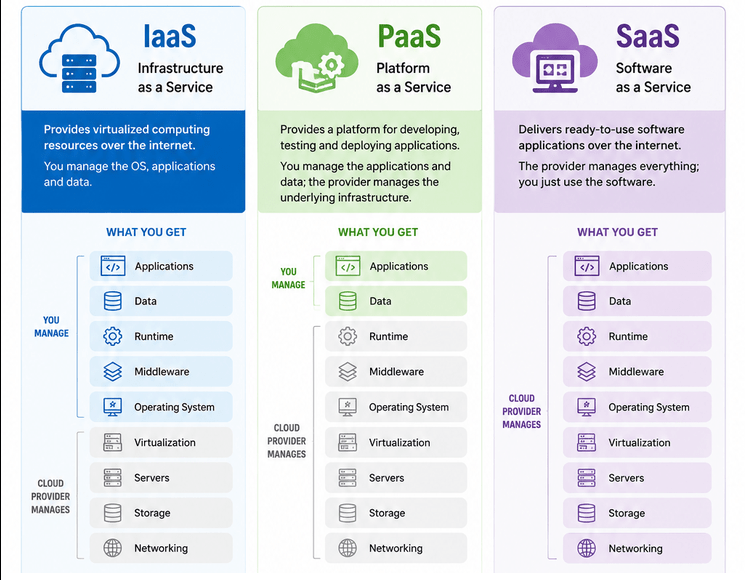
Note: This is a hypothetical case study for classroom discussion in the course Management Information Systems. The objective is to teach students learn about cloud computing ERP and challenges in emerging models of ERP adoption in enterprise applications. This is not a real case study.
Continue reading “FinAxis Technologies: A Case about Migrating from Monolithic ERP to Microservices in a Regulated Fintech Environment”


You must be logged in to post a comment.